
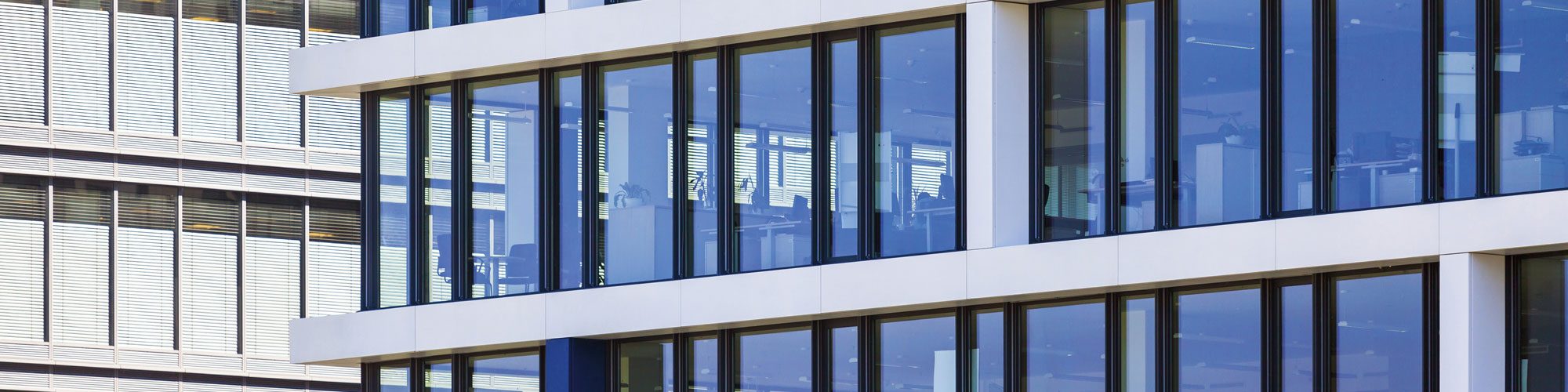
The three most important factors in real estate may be location, location, location, but there are still other factors that make a difference in enticing prospective renters, as well as potentially getting them to pay a premium. As such, commercial real estate companies should use sustainability as part of their marketing strategy, as more businesses want to be part of the growing eco-friendly movement.
Yet real estate companies need to move fast, before sustainability becomes the norm. No one markets indoor plumbing anymore, so companies should not take this window to market sustainability for granted.
It’s Good to Be Green
Commercial office buildings account for nearly 20% of U.S. greenhouse gas emissions, according to Energy Star, so there is ample opportunity to have a significant impact on reducing overall emissions.
Globally, the green building sector is doubling every three years, according to a Dodge Data & Analytics survey, as reported by the U.S. Green Building Council. Plus, 40% of all U.S. commercial building space uses Energy Star Portfolio Manager, which benchmarks energy consumption, among other features.
This trend to improve the sustainability of buildings coincides with a growing movement among businesses to increase their overall sustainability to satisfy customers and investors.
And businesses are being more public about their efforts, as 81% of S&P 500 companies published corporate sustainability reports in 2015, according to the Governance and Accountability Institute.
Making a Difference
Since sustainability is attractive to many businesses, the key now for commercial real estate companies is to not only go green, but to implement new technologies and strategies to make it a marketing differentiator, just as they might market other features such as an office building’s views or outdoors space.
In order to really make a difference in attracting tenants, real estate companies can implement energy analytics software (EAS) throughout their buildings, which tenants would value because rather than simply working in a green building, it gives them an opportunity to identify their hidden cost drivers and most beneficial energy investments that will reduce their energy usage and costs. The difference is akin to buying a hybrid car, which on its own saves gas, versus a hybrid car that also includes software displayed on the dashboard, designed to help drivers achieve better gas mileage such as by notifying them to hold a constant speed on highways.
Getting Specific
Another benefit of EAS is that it automates Energy Star reporting, so that makes it easier for companies to participate in this benchmarking. Organizations might then notice how they’re using more energy than competitors and find ways to remedy this imbalance. With EAS, businesses can then pinpoint which areas of the business consume the most energy, rather than only seeing their energy usage in aggregate.
At that point, tenants may want to work together with their landlords to cut down on energy usage, such as by upgrading heating equipment or installing sensors to control lights. Doing so not only helps the tenant use less energy, but it can also help commercial real estate companies financially.
In fact, energy-efficient buildings have higher occupancy rates, rent premiums and sale prices, according to a meta-analysis by the Institute for Market Transformation.
Request a complimentary energy efficiency assessment to find out how Artis Energy’s RTIS® energy analytics platform can provide you with the visibility and insight to transform energy from a fixed cost into a distinct competitive advantage.